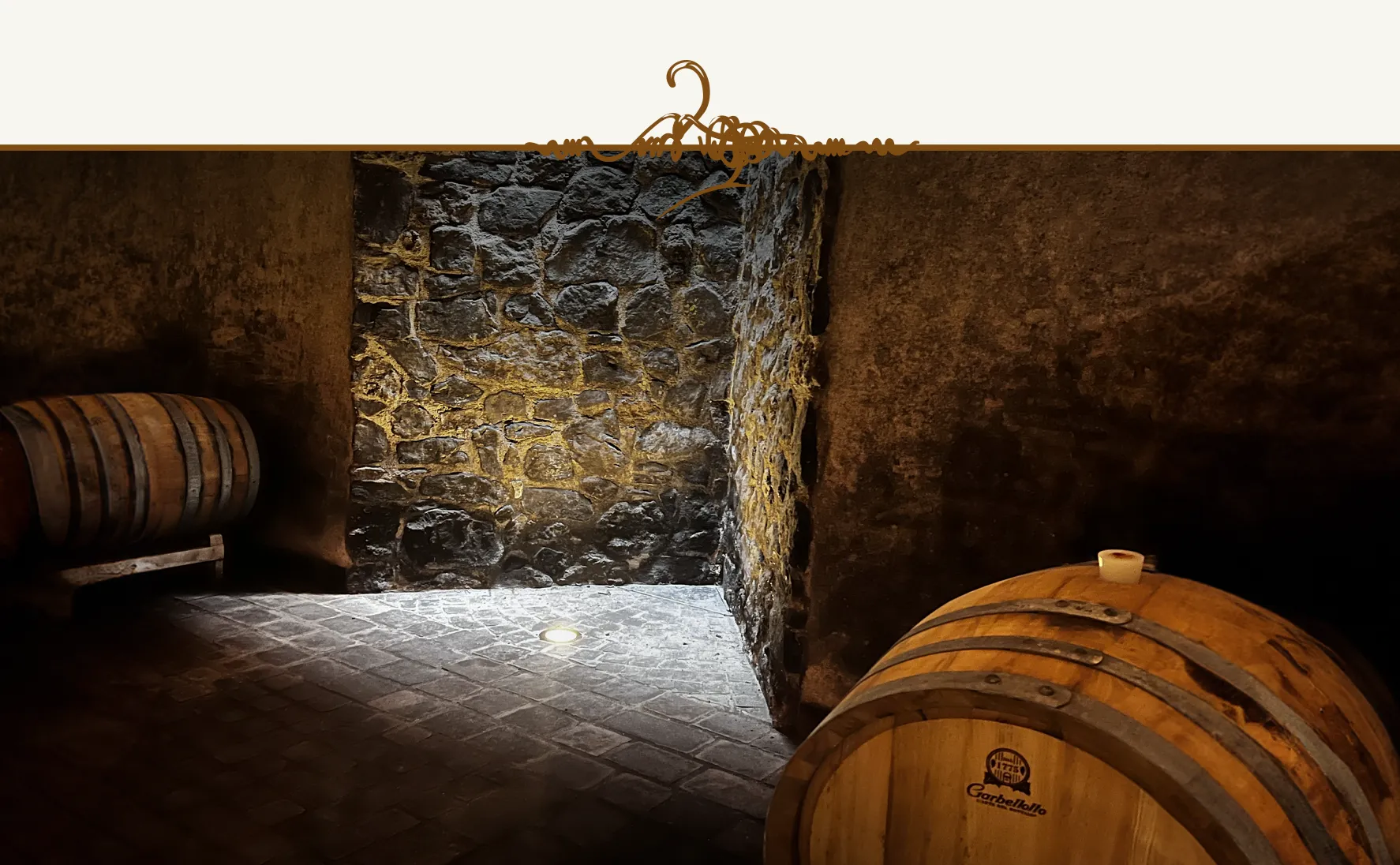
Colle Santa Lucia, Breganze
Native grape varieties of Breganze
A native (autochthonous) grape variety is one that originated in a specific territory, selected over centuries by local farmers.
Among the distinctive features of the winery stands the protection of ancient local grape varieties that had almost disappeared, such as Gruajo, Pedevendo, Marzemina bianca (also known as Sampa’ or Sampagna) and Groppello, authentic expressions of the Breganze territory.
The territory
Volcanic soilsThe Breganze terroir is defined by volcanic soils (basalt and black tufa), significant day-to-night temperature variations and a temperate microclimate shaped by the Prealpi Vicentine mountains.
The vineyards grow on volcanic soils at 200–400 m above sea level, in the heart of the Breganze DOC appellation in Veneto.
Vespaiola
The grape loved by waspsVespaiola is a white grape variety with a fairly long vegetative cycle. It needs long pruning and loves hilly terrain of volcanic origin and gravel, in sunny and airy sites.
In 1855 an agricultural exhibition in Vicenza listed over 190 grape varieties, including Vespaiola (or Bresparola), so called because its juice is particularly loved by wasps. As early as 1610 Andrea Scotto praised the wine production of the Vicenza area and mentioned Breganze, “famous for its sweet and savory wines”.
The origin of Vespaiola is uncertain: perhaps southern, perhaps French, but it was certainly brought to Breganze by the nobles of Vicenza to satisfy the tastes of the Venetians staying in their villas. In 1969 the first DOC of the province of Vicenza, “Breganze”, was recognised, including Breganze Vespaiolo.
From the same grape come different wines: Vespaiolo, a dry white from fresh Vespaiola grapes; Torcolato, a sweet passito from the same grapes dried for months; Anima, a Metodo Classico Dosaggio Zero sparkling wine from Breganze Vespaiola grapes.
Gruajo
Almost forgottenAn ancient native grape from the hills of Breganze, almost forgotten over time and brought back to life thanks to the passion and dedication of the Miotti family.
It is said that Firmino’s father entrusted him with a special legacy: “At the bottom of the field, you will find three ancient vines, called ‘cruvaie’. No one picks those bunches because they seem unripe and overlooked. But you gather them, press them: that wine will be your fortune.”
Historically considered a “capricious” grape due to the uneven ripening of the clusters, with some berries ripe and others still green, Gruajo nearly disappeared.
Groppello di Breganze
A red from the 14th centuryThe presence of Groppello in Breganze is documented as far back as the 14th century, as noted by Maroso and Varanini in “Vite e vino nel Medioevo da fonti veronesi e venete”. The poet Aureliano Acanti also mentioned it in 1754 in “Roccolo Ditirambo”.
The name “Groppello” is believed to derive from a Venetian term linked to its marked tannicity, a characteristic that has always distinguished it. It is a wine that does not fear time: it is very suitable for aging.
Pedevendo
The rarest grape of the Vicenza areaPedevenda is an extremely rare grape from the Vicenza area, cultivated almost exclusively by Cantina Firmino Miotti for over a century. It is a vigorous vine with consistent yields.
The cluster is medium-sized, with a greenish-yellow skin. It ripens late and thrives in hilly clay-limestone soils, showing good resistance to cold and diseases while maintaining a solid acidity even in the hottest years.
In 1754 Aureliano Acanti mentions it several times: “this rare Pedevenda is marvelous and enchanting”. From Pedevenda comes a bottle-refermented wine, with no added sulfites, just like in the old days.
Marzemina bianca
Sampà or SampagnaMarzemina Bianca is a historic Venetian grape variety, with documented evidence dating back to 1679 by Giacomo Agostinetti in his “Cento e dieci ricordi che formano il buon fattore di Villa”. In 1825 Acerbi, in “Delle viti italiane”, referred to it as Berzemina di Breganze.
In the early 1900s, during the post-phylloxera period, it tended to be replaced by more productive varieties and survived only in a few marginal vineyards, often vinified in blends with other grapes. The Miotti family, in the Breganze area, distinguished themselves by producing it in pure form.
Questions about the native grapes of Breganze
What does “native grape variety” mean?
A native (autochthonous) grape variety is one that originated in a specific territory, selected over centuries by local farmers to suit that precise microclimate and soil. The Breganze native varieties preserved by Firmino Miotti — Gruajo, Pedevendo, Sampà, Groppello and Vespaiola — represent the original viticultural identity of the Prealpi Vicentine foothills.
What are the historic native grape varieties of Breganze?
The main historic native varieties of Breganze grown by Firmino Miotti are: Vespaiola (the base of Torcolato and Vespaiolo DOC), Gruajo (red), Groppello di Breganze (red), Pedevendo (frizzante) and Marzemina Bianca (Sampà, frizzante). Firmino Miotti was among the first wineries in Italy to recover and vinify these nearly extinct varieties.
Why is Vespaiola called that?
Vespaiola (or Bresparola) is so called because its juice is particularly loved by wasps. Records of it in the 1800s are scarce, perhaps because the wasps damaged the harvest and made cultivation unprofitable.
Since when has Groppello been grown in Breganze?
The presence of Groppello in Breganze is documented as far back as the 14th century, as noted by Maroso and Varanini in “Vite e vino nel Medioevo da fonti veronesi e venete”. In 1754 the poet Aureliano Acanti mentioned it in “Roccolo Ditirambo”.
What is Marzemina bianca?
A historic Venetian grape variety, documented since 1679. In the early 1900s it tended to be replaced by more productive varieties; in the Breganze area the Miotti family produces it in pure form. Marzemina Bianca gives Sampà, a sparkling wine refermented on the lees.
Where can I find Firmino Miotti's native variety wines?
Directly at the winery, via Brogliati Contro 53, Breganze (VI), during opening hours or by appointment (tel. +39 0445 873006), and online at vaigustando.it with delivery throughout Italy. These are limited productions: check availability directly with the winery.
Can I taste them at the winery?
Yes, by appointment: tel. +39 0445 873006 or info@firminomiotti.it. You can request themed itineraries, such as a tasting of the recovered native varieties.